
THE RIGHT SUPPLIES
Good packing starts with the right materials. Don't cheap out here.
- Use new, strong boxes with lids — boxes without lids can't be stacked, and weak boxes collapse under weight.
- Use specialty boxes for mirrors, artwork, stemware, and lamp shades — they're designed to protect what regular boxes can't.
- Use bubble wrap for fragile items, and packing paper instead of newspaper — newsprint leaves ink residue on your belongings.
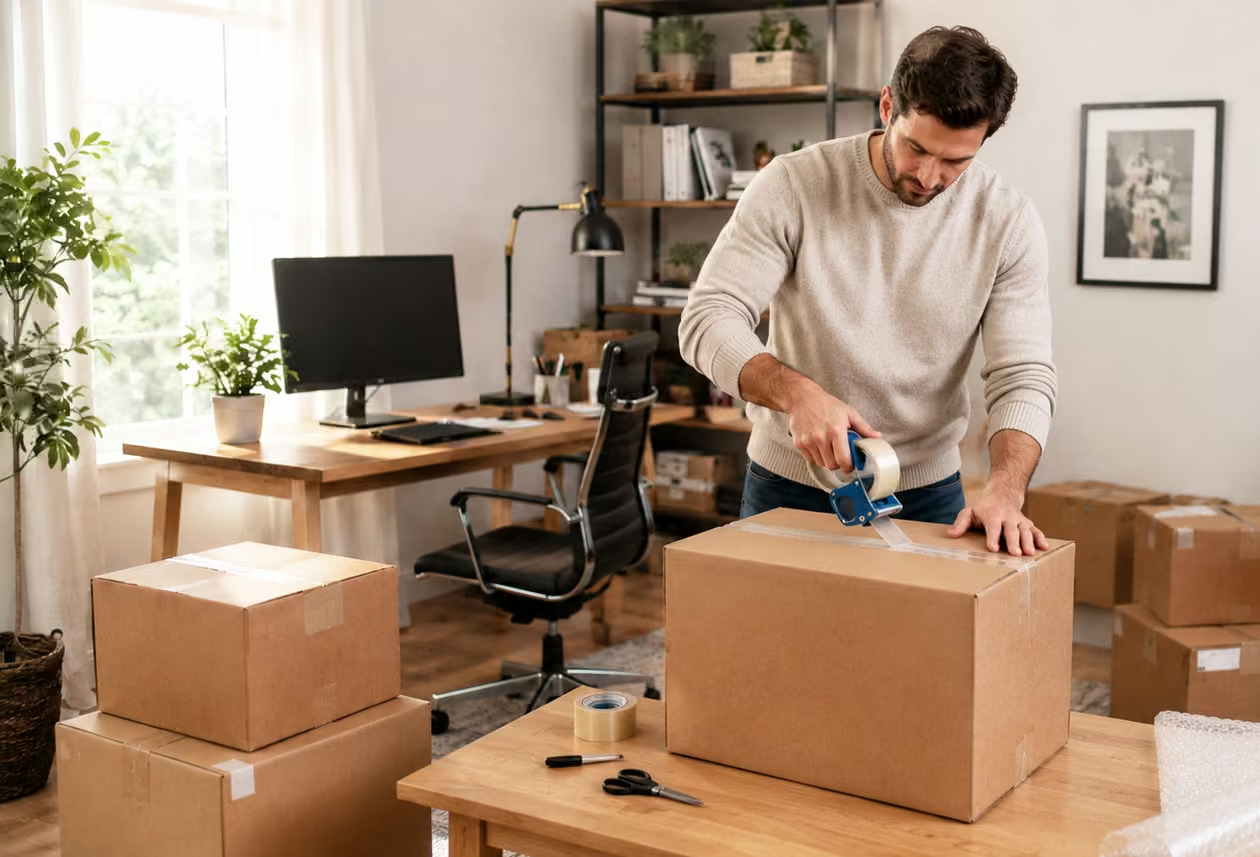
- Use strong packing tape and permanent markers — label boxes clearly on the top AND side, draw a right-side-up arrow, and mark fragile boxes plainly. Future you will be grateful.
- Ask your ASAP consultant for guidance — they'll tell you exactly how many boxes and what types you need for your move. Check our supplies page for more info.
PACKING STRATEGY
A thorough packing job means a faster, cheaper move day.
- Pack room by room — keep contents grouped and label boxes with both contents and destination room. We'll know exactly where to drop them, and unpacking becomes painless.
- Finish before we arrive — everything packed, sealed, and labeled. The more prepared you are, the faster we work.
- Gather boxes in one area if possible — fewer trips, faster load, lower bill.
BOXES DONE RIGHT
The way you pack a box determines whether it survives the truck.
- Heavy items in small boxes, light items in large boxes — books go small, lampshades and pillows go large. Sounds backwards until you try lifting a large box full of books.
- Heaviest items at the bottom, lightest on top — every time.
- Fill every box completely, but don't overstuff — empty space causes collapse, overflowing causes breakage.
- Seal boxes well with tape all around — and again, lids are non-negotiable for stacking.
- Skip garbage and grocery bags entirely — they tear, they can't be stacked, and they get mistaken for trash. Don't use them.
CLOTHING
Easiest category to move if you do it right.
- Keep clothes on hangers — our trucks come with 2 wardrobe boxes free of charge for temporary use.
- Want wardrobe boxes to keep? — let your consultant know before move day so we bring extras.
- Don't cram clothes into suitcases or hockey bags — they get crushed, wrinkled, and heavy.
FRAGILES, DISHES & ARTWORK
Where most DIY packing goes wrong. Slow down here.
- Mark every fragile box "FRAGILE" — clearly, on multiple sides. We'll handle them accordingly.
- Wrap fragile items in bubble wrap or packing paper before boxing — then line the box with wadded paper for cushioning.
- Dishware goes on its side, never flat — stacking plates flat is how they crack. Double-wrap each dish with two pieces of packing paper, snug but not crushed.
- Stemware goes upside down in the box — with paper bumpers between and on top so nothing shifts. YouTube has good visual demos if you want to see it done.
- Mirrors, paintings, prints, shelves, and flat boards go together — in specialty boxes, with bubble wrap.
FURNITURE, APPLIANCES & ELECTRONICS
Bigger items need more lead time and the right people.
- Disassembly needs to be scheduled — if something was assembled in your home, it likely needs to come apart before moving. Tell us ahead of time so we plan the time and bring the right tools.
- Hardware goes in a labeled bag, taped to the piece — screws, bolts, pegs, Allen keys. Lose them and reassembly becomes a nightmare.
- Tell us if you want reassembly at destination — we'll factor it into the schedule.
- Wrap and tape dangling wires on lamps, TVs, and small appliances — use strong tape. Loose cords get snagged and damaged.
- Major appliances need a pro — fridges, stoves, washers, dryers, dishwashers should be uninstalled by a plumber or electrician before we arrive, and reinstalled the same way. Especially anything gas, anything with a water line.
- Wall-mounted TVs need a specialized technician — for both removal and reinstallation. We wrap them with extra care for transport, but mounting isn't our job.
KEEP WITH YOU
Some things shouldn't go on the truck at all.
- Pack an overnight bag — toiletries, change of clothes, medication, a fresh roll of toilet paper. Anything you'll need in the first 24 to 48 hours. Make it easy to spot.
- Transport valuables yourself — cash, jewellery, heirlooms, bullion, firearms and ammunition, family photos, and important documents (passports, SIN cards, health cards, birth certificates, wills, warranty receipts, insurance papers, moving documents). These stay with you, not us.